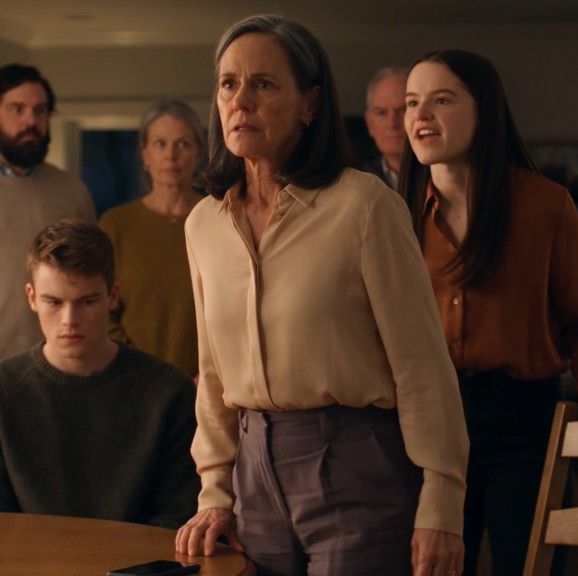
The Place Beside Walt
Tara pulled the chair away just as I reached the Thanksgiving table.
The legs scraped loudly across the hardwood, silencing twenty-one people at once. My hands tightened around the gravy boat, hot porcelain trembling between my fingers.
“Sorry,” she said, smiling at her parents. “The table looks better without the extra chair.”
My chair.
The one beside Walt’s old place setting. The one I had used for more than thirty years in the home we bought, repaired, and paid for long before Tara ever stepped through the front door.
I stood in the hallway while everyone watched me.
No one moved.
No one spoke.
Then Tara pointed toward the kitchen.
“You can serve from there, Sandra. It’ll keep the flow better.”
A few people laughed nervously.
Her mother lifted her wineglass. Her sisters kept whispering. Someone complimented Tara on “her beautiful home.”
Tara accepted the praise without correcting them.
But I wasn’t watching Tara.
I was watching my son, Cole.
He sat at the far end of the table, staring at his plate as if the silverware had suddenly become fascinating. He knew exactly what she had done. He saw the empty space where I belonged.
All I needed was one sentence.
“Mom, sit down.”
“Tara, this is her house.”
But Cole said nothing.
Tara touched my elbow.
“Don’t make this uncomfortable.”
I looked at her hand, then at the table I had prepared since sunrise. My mother’s china. My polished silver. The linen napkins I had pressed until my wrists ached.
Every seat was filled.
Except mine.
For two years, Tara had slowly renamed everything I owned.
My living room became “their entertaining space.” My guest room became “Sandra’s little room.” My kitchen became the background for her holiday photographs.
She moved furniture without asking, invited relatives I had never met, and corrected me in front of guests with that calm, pleasant smile.
But three weeks earlier, I had found something on the kitchen island.
