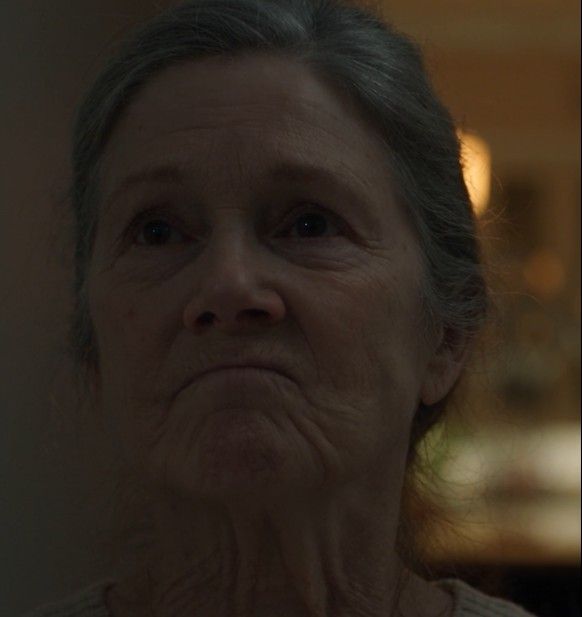
Standing in the doorway of my son’s Los Angeles apartment, holding a chocolate cake he’d loved since he was a little boy.
His wife Diana looked me up and down.
“Everyone inside is important tonight,” she said quietly. “Clients, managers, people who can help Robert’s career. We don’t need awkwardness.”
She wore an emerald dress and diamond earrings.
Her smile was polished.
And it never once reached her eyes.
I looked past her shoulder and saw silver balloons, wine bottles, at least fifteen guests laughing under warm pendant lights. Robert stood in the middle of it all, holding a wineglass, smiling.
Then our eyes met.
For one second I saw the little boy who used to wait at the window for me after my second shift. The child who once drew me wearing a cape and wrote, “Mom saves everything.”
Then Robert looked away.
He turned back to his colleague and kept talking.
That silence hit harder than Diana’s words.
I held the cake out to her.
“Happy birthday to Robert,” I said.
She took it with one hand. Barely glanced at it.
“You understand, don’t you?” she said. “We’re trying to build a certain kind of life.”
She expected me to cry.
Maybe cause a scene she could later describe as proof I was difficult.
Embarrassing.
Instead I smiled.
That confused her.
I stepped backward, pressed the elevator button, and left with my dignity intact.
The apartment door closed before the elevator even arrived.
On the ride down I studied my reflection in the brushed metal doors. Sixty-five years old. Gray hair. Cream sweater I’d chosen because Robert once told me that color made me look warm.
Three years I had mistaken endurance for love.
At home I sat in the dark with my handbag still on my lap. Then something Robert had said that morning kept circling in my mind.
At nine that morning he had called and said, “Mom, please don’t miss tonight. It would mean a lot.”
But Diana had spoken as though my presence had been an act of charity.
One of them was lying.
I stood, went to the bedroom closet, and pulled down a cardboard box from the top shelf. Financial papers Robert had asked me to sign over the past two years. Papers I had avoided reading closely because doing so would have meant admitting I didn’t fully trust my son.
Trust no longer had anything to protect.
I spread them across the bed.
The first was a mortgage application for a two-hundred-fifty-thousand-dollar condominium. Robert had told me it was a preliminary income-verification form.
It was not.
My name appeared under co-signer and guarantor.
My signature sat on every page.
The second document gave Robert full access to my credit history. The wording was broad enough to cover more than one loan.
I felt cold despite the closed windows.
The third document destroyed what was left.
Our joint bank account. Five hundred dollars a month I deposited, believing the money was being saved for emergencies.
The statements showed everything spent.
Restaurants. Designer shops. A resort weekend. A furniture deposit.
And a twelve-thousand-dollar transfer to a condominium developer.
The account balance after that was sixty-three dollars.
Robert had told me the reservation deposit came from his annual bonus.
It came from my pension.
I sat on the edge of the bed, holding the statement. Then I found one more detail buried in the paperwork.
A notarized page with a witness signature I recognized.
Diana’s sister Melissa.
Melissa had never been present during any meeting where I signed anything.
