“Please don’t scare him.”
The guards froze.
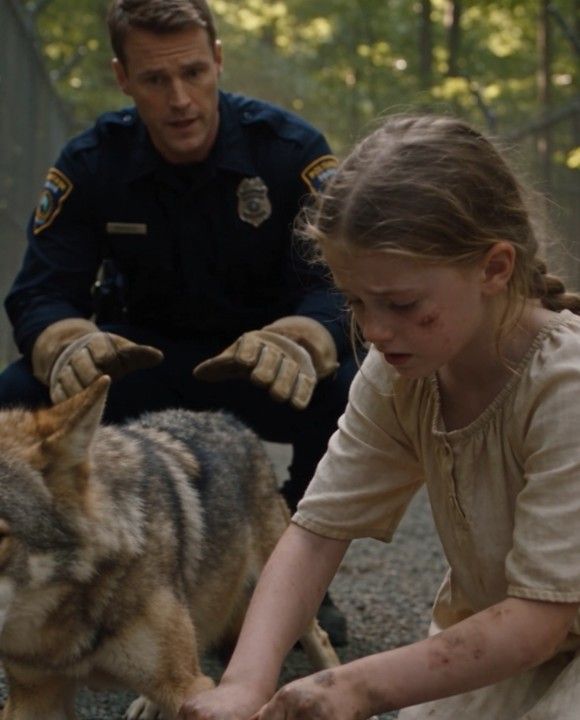
A seven-year-old girl was kneeling inside the wolf enclosure, her bare hands wrapped around a wire snare.
The cub was trembling.
She didn’t look back. She kept her eyes fixed on the terrified animal.
“He’s almost loose,” she whispered. “Please don’t come over too quickly.”
The guards didn’t move.
One of them—young, with a natural instinct that years of training had not yet conditioned out of him—slowly lowered himself into a crouching position.
He kept his voice calm and steady.
“Okay.”
He stayed exactly where he was.
“We won’t move quickly. You’re doing really well. What do you need?”
The girl glanced down at the wire.
“I need something that can cut this.”
She flexed her exhausted fingers.
“Or gloves. If you have gloves, you can do it. My hands aren’t strong enough to get through this last part.”
The younger guard had a pair of gloves.
Moving carefully, without rushing, he crossed the enclosure toward her. He crouched down beside her and took hold of the final section of wire.
His hands had the strength hers no longer did.
After several tense moments, the last piece finally came free.
The cub was free.
It quickly scrambled backward, moving on just three legs for a moment as though testing how much weight it could safely put on the leg that had just been released.
A few seconds later, it started walking normally again.
But the cub did not run away.
Instead, it stopped about ten feet from them and stared directly at the girl.
Its yellow wolf eyes carried none of the human expectations of gratitude or understanding.
Yet to everyone watching, there still appeared to be something meaningful in that gaze.
The girl stared back.
Then she slowly lowered herself onto the service path and began crying.
She wasn’t crying because she was scared.
