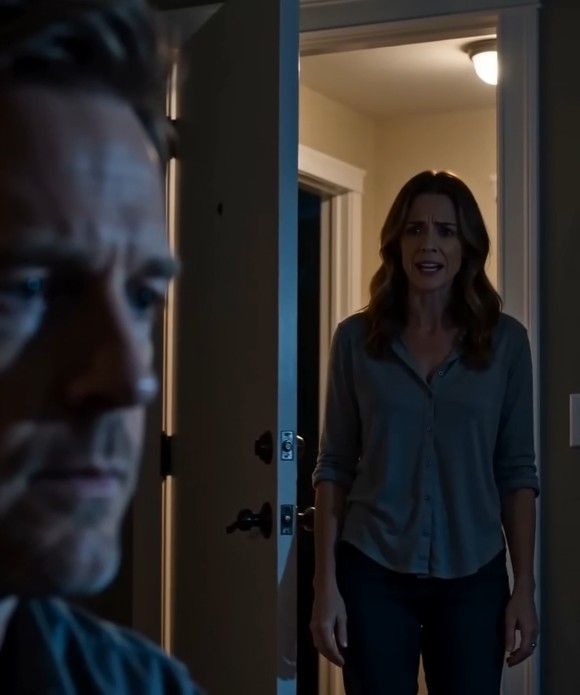
“You’re still awake? God, you’re pathetic.” Sarah’s voice cut through the dark house just after midnight.
James was sitting quietly when she came in, exactly where she apparently expected him to be—waiting, absorbing another insult, preparing to let the moment pass the way so many others had. For months, he had done exactly that.
Sarah had grown used to it. She dropped the words casually, as though contempt had become an ordinary part of their marriage.
James did not argue. He did not ask where she had been or why she had come home so late.
That silence made her look at him again. “I’m leaving,” he said.
Sarah laughed. Not nervously.
Confidently. “Stop with your threats.
You’ll never actually leave me.” James remained still for another second. Sarah had heard versions of this before.
Frustration, arguments, promises that something had to change. Each time, the marriage had continued, and every return had made the next warning easier to dismiss.
Endurance had started to look like permanence. Sarah had come to believe James would always stay.
James stood. “I’m not threatening you,” he said.
“I’m finished.” The laughter disappeared. For the first time that night, Sarah seemed to study him rather than simply react to him.
James’s voice had not risen. That mattered.
There was no dramatic attempt to make her understand how much the insults had hurt. No desperate effort to convince her that he deserved better treatment.
He had spent months doing enough of that inside his own head. At first, enduring the contempt had seemed like strength.
Marriage required patience. People said things when they were angry.
Bad periods passed. Those explanations had allowed James to keep functioning, but they had also allowed the questions to remain unanswered.
How much disrespect was he supposed to absorb before patience became permission? How many times could someone tell him what he would never do before he began believing it himself?
Sarah crossed her arms. “You’re being ridiculous.” James did not take the invitation.
The argument could have become louder. Sarah could insult him again, and he could answer every sentence until neither remembered how the conversation had started.
Tonight, volume was not the point. James had already made the decision.
Sarah seemed to realize that slowly. Her confidence shifted.
“You seriously expect me to believe you’re walking out?” James looked at her. For months, she had assumed that every boundary would eventually bend.
Every argument would end with James still there. She had learned that his pain did not necessarily require anything from her because he kept carrying it quietly.
That pattern had ended before she walked through the door. James reached beside him.
Sarah’s expression changed when she saw what he was holding. Divorce papers.
There was no threat left to debate. No hypothetical future to mock.
James placed the papers in front of her. Sarah stared down at them.
For several seconds, neither spoke. The house that had felt ordinary when she entered now seemed different—not because anything physical had changed, but because James had stopped asking her to believe he might leave.
He had already taken the step she was certain he never would. Sarah looked back up at him.
